
Why Roof Shingles Curl and What to Do Next
A curled shingle may look like a small cosmetic issue from the driveway, but it can be an early warning that your roof is losing its ability to shed water. In Central Indiana, where roofs take on summer heat, heavy rain, wind, snow, and freeze-thaw cycles, understanding why roof shingles curl helps you act before a few raised edges become a leak, damaged decking, or a larger replacement project.
Curling does not always mean you need a new roof tomorrow. The right answer depends on the shingle's age, the extent of the problem, and what is happening beneath it. A close inspection can separate an isolated repair from a roof that is nearing the end of its dependable service life.
What Curled Shingles Actually Look Like
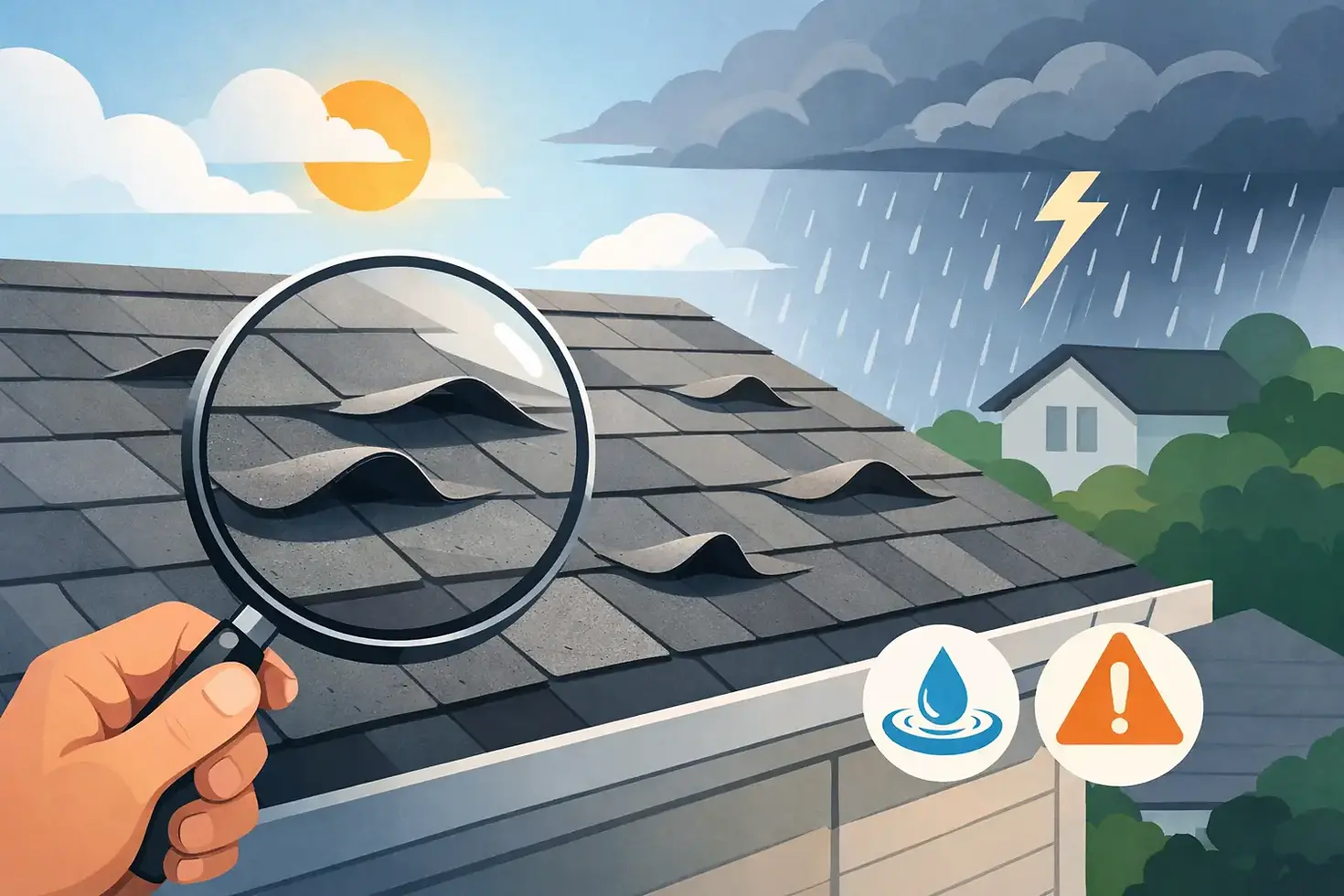
Shingles can curl in more than one way. Sometimes the lower corners lift upward, a condition often called clawing. Other times, the center of the shingle rises while the edges remain flatter, creating a cupped appearance. You may also see tabs that no longer lie flat, exposed nail heads, cracking, or granules collecting in gutters and at the bottom of downspouts.
These changes matter because asphalt shingles are designed to overlap tightly and direct water downhill. Once edges lift, wind-driven rain can work its way underneath. The roof may still look mostly intact from the ground, while vulnerable areas are already developing around valleys, vents, chimneys, and roof edges.
Why Roof Shingles Curl: The Most Common Causes
Age and normal material breakdown
Asphalt shingles do not last forever. Over time, sunlight dries out the asphalt oils that help shingles stay flexible. Temperature swings then make the material expand and contract until it becomes brittle, cracked, or curled.
This is especially common on older roofs approaching the later years of their expected lifespan. A few curled shingles on a 20-year-old roof are often part of a broader aging pattern, not simply a few bad pieces that can be swapped out permanently. Repairs can sometimes buy time, but a professional should assess whether the surrounding shingles are also weakening.
Heat buildup and poor attic ventilation
An attic that holds too much heat can shorten roof life. In the summer, trapped heat can raise the temperature of the roof deck and shingles far beyond the outdoor air temperature. That ongoing heat stress can dry out shingles, weaken their adhesive strips, and contribute to curling.
Ventilation is not just about adding a vent wherever space allows. Intake near the soffits and exhaust near the ridge need to work together so air can move through the attic properly. Blocked soffit vents, insufficient ridge ventilation, insulation installed over intake openings, and bathroom fans venting into the attic can all create moisture and heat problems.
If the shingles are curling because the attic is overheating, replacing the roof without fixing the ventilation issue can lead to the same problem again. A complete evaluation should look at both the roof surface and the attic conditions underneath it.
Moisture beneath the shingles
Roofing materials need a dry, stable deck beneath them. When moisture reaches the decking through a leak, condensation, or inadequate ventilation, the wood can swell or deteriorate. That movement may push shingles out of position and make them curl or buckle.
Signs of this problem can include soft spots when walking the roof, a sagging roofline, stains on attic framing, musty odors, or water marks on interior ceilings. This is not a situation to cover up with new shingles. The damaged source and any compromised decking should be addressed before a repair or replacement moves forward.
Installation problems
A roof can develop premature curling when shingles were not installed according to manufacturer requirements. Common issues include incorrect nail placement, too few nails, nails driven too high or too deep, inadequate underlayment, or shingles installed over an uneven surface.
Improperly installed shingles may not seal correctly. In windy Indiana weather, loose tabs can lift repeatedly, letting in water and accelerating wear. Roofing over old shingles can also create an uneven base and trap heat, which may contribute to early deterioration.
Not every curled shingle points to poor workmanship, particularly on an older roof. But when curling appears only a few years after installation or is concentrated in a certain area, an inspection should consider installation quality and warranty coverage.
Weather exposure and storm damage
No roof avoids the weather, but repeated exposure takes a toll. High winds can break adhesive seals and bend shingle edges upward. Hail may knock off protective granules. Intense sun fades and dries the surface. Winter ice can stress vulnerable edges, especially where attic heat causes snow to melt and refreeze at the eaves.
Storm damage is not always obvious immediately after a weather event. A shingle that lifts and settles back down may later become brittle or fail to reseal. After a major wind or hail storm, a roof inspection can identify damage while it is still limited and document conditions before a small issue becomes a water problem.
Can Curled Shingles Be Repaired?
Sometimes, yes. If curling is limited to a small area and the rest of the roof is in good condition, replacing damaged shingles and correcting the cause may be a sensible, cost-effective repair. This is more likely when the roof is relatively new, the issue resulted from a specific storm event, and matching shingles are available.
The trade-off is that a repair cannot restore the remaining life of a roof that is broadly aged or heat-damaged. If shingles are curling across multiple slopes, losing substantial granules, cracking, or becoming difficult to walk on without breaking, replacement is often the safer long-term investment.
A trusted contractor should explain that difference plainly. Homeowners deserve to know whether a repair will realistically protect the home or simply delay an inevitable replacement for a short period.
What Homeowners Should Do When Shingles Start Curling
Start with a safe visual check from the ground. Look for raised corners, uneven roof lines, missing shingles, dark patches, exposed areas, and granules near gutters. Inside the home, check the attic and upper-level ceilings for stains, damp insulation, mold-like odors, or daylight around roof penetrations.
Avoid climbing onto the roof to press curled shingles back down. Older shingles can crack underfoot, and lifted edges may be a symptom of damage below the surface. Caulk and roof cement are also not universal fixes. Used in the wrong place, they can trap moisture, create an unattractive patch, and leave the real issue unresolved.
Instead, schedule a professional roof inspection. The inspection should identify the condition of the shingles, flashing, decking, ventilation, gutters, fascia, and soffits. Gutters deserve attention here because clogged or overflowing gutters can keep water against the roof edge and fascia, adding stress where the roofing system is already vulnerable.
Preventing More Curling on Your Roof
No maintenance plan can stop an aging roof from eventually needing replacement, but regular care can prevent avoidable damage. Keep gutters and downspouts clear so water drains away from the roofline. Trim branches that scrape shingles or drop heavy debris. Address loose flashing, damaged fascia, and small leaks promptly rather than waiting for a ceiling stain.
Attic ventilation should also be checked whenever roofing work is being considered. Proper airflow helps manage heat and moisture year-round, protecting not only shingles but also roof decking and insulation. This is one reason a roof should be treated as a complete system, not just a layer of shingles.
For homeowners in Carmel, Fishers, Anderson, Indianapolis, and nearby communities, Two Men and a Gutter can help assess whether curled shingles call for a focused repair, improved ventilation, or a full roof replacement. The goal is straightforward: protect your home with quality work, clear communication, and a recommendation that fits the actual condition of your roof.
A roof rarely fails all at once. Paying attention to curled shingles now gives you more choices, more time to plan, and a better chance to keep water where it belongs - outside your home.


Comments