
Underground Downspouts Cleaning: What to Know
- twomenandagutter2
- Jul 30
- 5 min read
Water overflowing at the gutter is easy to spot. Water backing up at the bottom of a downspout is not. When an underground drain line clogs, rainwater can pool near the foundation, soak landscaping, stain siding, and put extra stress on your gutter system. Underground downspouts cleaning is one of those home maintenance jobs that can prevent a much larger drainage problem before Central Indiana rain and freeze-thaw weather make it worse.
What Are Underground Downspouts?
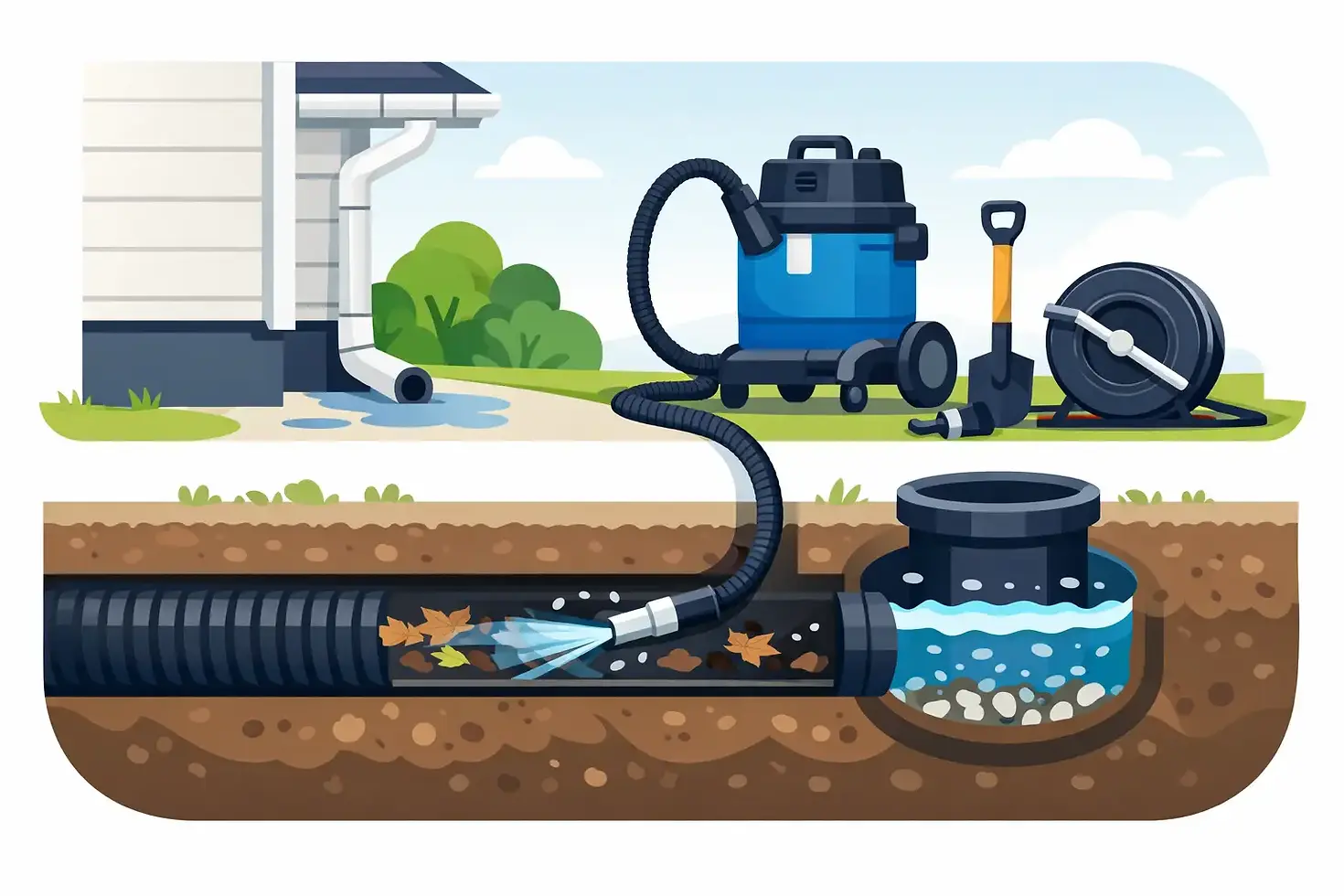
Many homes have downspouts that empty into a buried pipe near the foundation. That pipe carries roof runoff away from the house and releases it at a pop-up emitter, a drain opening, a dry well, or another approved drainage point farther into the yard.
This setup can look cleaner than a long above-ground extension and keeps walkways clearer. It also works well when the pipe has the correct slope, enough capacity, and a clear exit. The trade-off is that the pipe is out of sight. Leaves, shingle grit, mulch, dirt, and roots can build up for months before the homeowner realizes the water has nowhere to go.
A buried downspout line is not the same as a sanitary sewer line, and it should never be treated as one. Its job is simple: move rainwater away from your home quickly and reliably.
Signs Your Buried Downspout Needs Attention
The first warning sign is often water spilling over gutter edges during a normal rain. Homeowners may assume the gutters are clogged, but the gutters can be clear while the underground line is blocked below. If water cannot leave the downspout, it backs up through the entire system.
Look for water standing at the downspout connection, wet soil close to the foundation, or a pop-up emitter that never opens during a hard rain. You might also notice erosion, washed-out mulch, mossy areas, or a section of lawn that stays soft long after the rest of the yard has dried.
Inside the home, persistent moisture around a basement wall, a musty odor, or dampness in a crawl space can sometimes be tied to poor exterior drainage. Those symptoms do not automatically mean the downspout pipe is the cause, but they are worth investigating. Water should always be directed away from the house, not allowed to collect beside it.
A Simple Rainy-Day Check
During a steady rain, watch each downspout from a safe spot on the ground. Water should enter the downspout without overflowing and should exit at the far end of the buried line. If the line uses a pop-up emitter, it should lift and release a visible flow of water.
Do not climb a ladder in wet conditions or stand near slick roof edges. A basic observation from the ground can reveal a lot. If one downspout is overflowing while the others work normally, that individual line likely needs service.
Why Underground Downspout Lines Clog
Most clogs begin with debris from the roof. Even a well-maintained gutter system collects fine shingle granules, twigs, seeds, and small leaves. Heavy storms can push that material into the downspout and eventually into the underground pipe.
Central Indiana yards add another challenge: root growth. Tree and shrub roots naturally seek moisture, and older drain pipes or loose fittings can give them an entry point. A pipe may also shift, crack, or become partially crushed from soil movement, vehicle traffic, construction, or years of settling.
The outlet itself is another common trouble spot. Pop-up emitters can get buried under mulch, blocked by grass, frozen shut in winter, or packed with mud. Cleaning the pipe without checking the outlet can leave the real restriction in place.
How Professional Underground Downspouts Cleaning Works
A proper service starts with finding out where the water is stopping. The technician checks the gutters, downspout connection, visible drain openings, and discharge point. This matters because a blockage near the top of the downspout requires a different approach than a root-filled pipe or a buried outlet.
The line is then flushed with controlled water pressure or cleared using equipment suited to the pipe and the type of debris present. The goal is not simply to force water into the ground. The goal is to restore a complete path from the gutter to the outlet and confirm the water is discharging away from the foundation.
If a line will not clear, that is useful information. It can point to a collapsed section, a disconnected fitting, severe root intrusion, or a pipe with poor slope. In those cases, repeated flushing may not solve the problem. The affected section may need repair, replacement, or a redesigned drainage route.
A dependable contractor should explain what was found in plain language. Homeowners deserve to know whether they are dealing with a removable clog, an outlet issue, or a pipe problem that needs a longer-term fix.
Can You Clean a Buried Downspout Yourself?
Some homeowners can handle a minor blockage when the pipe has an accessible outlet and the issue is close to the surface. Start by clearing leaves and debris from the gutter, then inspect the downspout opening and the emitter or outlet. A garden hose can help test whether water is moving through freely.
Use caution with drain snakes, high-pressure equipment, and harsh chemical cleaners. A metal auger can damage thin or aging pipe, catch on fittings, or become stuck underground. High-pressure water can force apart a weak connection or flood an already compromised area. Chemical drain products are not designed for outdoor stormwater lines and can harm landscaping while doing little to solve a packed debris or root blockage.
It is also wise to stop if water begins rising near the house. Continuing to add water to a blocked system can create the exact drainage problem you are trying to avoid. When the line does not clear easily, a professional inspection is usually the more affordable choice than digging up a yard based on guesswork.
Preventing Future Clogs and Water Damage
Regular gutter cleaning is the best first defense because it removes the debris before it reaches the buried drain. For many homes, cleaning in spring and fall is a practical starting point. Properties with mature trees, heavy pine needles, or nearby construction may need more frequent attention.
Gutter guards can reduce the amount of large debris entering the system, although they are not a reason to ignore maintenance altogether. Fine roof grit and small organic material can still collect over time. The right guard should fit the roofline and gutter system properly so water can enter the gutter without creating overflow problems.
Keep pop-up emitters and drain exits visible. Avoid piling mulch, soil, or decorative stone over the outlet. After major storms, take a quick look at the discharge area and make sure water is flowing away from the foundation rather than returning toward it.
If you are replacing gutters or repairing fascia, that is also a good time to evaluate drainage. A new gutter system can move more water efficiently, but it still needs a clear place to send that water. Matching gutter capacity, downspout size, and underground drainage is what protects the home during a heavy downpour.
When It Is Time to Call for Help
Call for service when water repeatedly overflows from a downspout, the buried line will not pass a hose test, or the yard stays saturated near the foundation. It is also smart to get help if you see sinkholes, severe erosion, damaged pipe connections, or water entering a basement or crawl space.
Two Men and a Gutter helps Central Indiana homeowners keep gutters and downspouts working as one complete drainage system. Clear communication, careful work, and a practical recommendation matter because no two yards, rooflines, or drainage problems are exactly alike.
Your downspouts do their best work quietly, carrying water away before it has a chance to damage anything. Give the system attention before the next hard rain, and your home will be better prepared to stay dry, protected, and looking its best.


Comments