

Aluminum vs Copper Gutters for Indiana Homes
A gutter system has one job: move water away from your home before it can damage the roofline, siding, foundation, landscaping, or basement. But when homeowners compare aluminum vs copper gutters, they are usually deciding about more than drainage. They are weighing budget, appearance, long-term upkeep, and how well the system fits the home they have worked hard to maintain.
For most Central Indiana homes, aluminum is the practical, dependable choice. Copper is a premium upgrade with a look and lifespan that can be hard to match. Neither material is automatically right for every property. The best choice comes down to what you need your gutters to do, what you want your home to look like, and how long you plan to own it.
Aluminum vs Copper Gutters: The Main Difference
Aluminum gutters are lightweight, corrosion-resistant, and available in a wide range of factory colors. They are the most common choice for residential gutter installation because they perform well through rain, snow, humidity, and seasonal temperature changes without requiring a major investment.
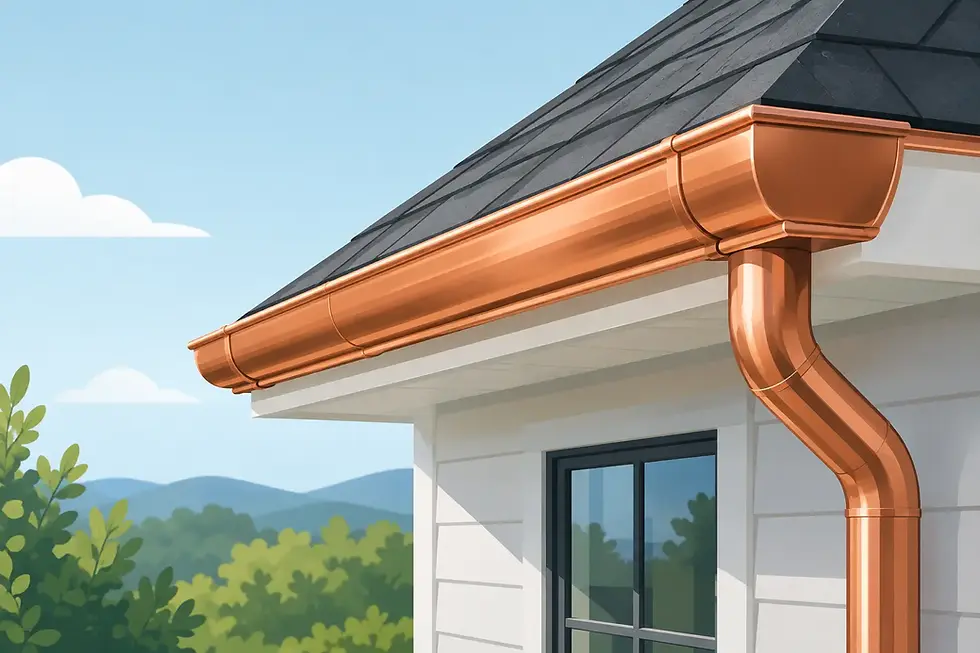
Copper gutters are a high-end material known for their distinctive appearance and exceptional longevity. New copper has a warm, bright finish. Over time, it naturally darkens and develops a patina, often shifting to deep brown and eventually green tones. Many homeowners choose copper because it adds character to historic homes, custom builds, and properties where exterior details matter as much as function.
Both materials can direct water effectively when the system is properly sized, pitched, secured, and connected to downspouts. Installation quality matters just as much as the metal itself. A premium gutter material will not solve drainage problems if it is installed without the right slope or if downspouts discharge too close to the foundation.
Cost: What Homeowners Should Expect
Aluminum generally costs far less than copper, both for the material and installation. That difference makes aluminum a strong value for homeowners replacing aging gutters, repairing storm damage, or improving drainage before water issues become expensive repairs.
Copper costs more because the material is more expensive and installation requires specialized craftsmanship. Copper sections are typically joined through soldered connections rather than the hidden hangers and seams commonly used with aluminum systems. Done correctly, that work creates a beautiful, durable system, but it takes more labor and experience.
The price gap does not mean copper is overpriced. It means copper is a long-term architectural investment rather than a basic replacement material. For a home with a premium roof, masonry exterior, custom trim, or historic character, copper may support the overall value and visual standard of the property. For a typical home where reliable drainage and a clean appearance are the priorities, aluminum often delivers the better return.
Durability in Indiana Weather
Indiana gutters need to handle heavy spring rain, summer storms, falling leaves, winter freeze-thaw cycles, and snow loads. Both aluminum and copper can perform well here, but they handle wear differently.
Aluminum holds up without rusting
Aluminum does not rust, which is a major benefit in wet conditions. Quality aluminum gutters can last for many years with proper installation and routine cleaning. The material is also light, so it places less weight on the fascia board than heavier gutter options.
Its main weakness is that aluminum can dent or bend from ladders, branches, hail, or heavy ice. Thin aluminum is more vulnerable, which is why gutter thickness and hanger spacing should not be overlooked. A properly supported seamless aluminum system is far more reliable than a bargain installation with weak fastening or poorly placed downspouts.
Copper is built for the long haul
Copper does not rust and can last for decades. It is less likely to crack in cold weather than some other materials, and its soldered joints can be exceptionally durable. As copper ages, the changing finish is normal and expected - not a failure of the material.
Copper can still be damaged by major impacts, and it is not maintenance-free. It also needs to be installed with compatible fasteners and flashing materials. Mixing dissimilar metals incorrectly can lead to galvanic corrosion, so this is not a job for guesswork or a one-size-fits-all gutter crew.
Appearance and Curb Appeal
This is where the aluminum vs copper gutters decision often becomes personal.
Aluminum gives homeowners flexibility. It can be made in colors that coordinate with the roof, siding, fascia, soffit, or trim, allowing the gutters to blend in or create a subtle accent. Seamless aluminum gutters also provide a clean, continuous appearance with fewer potential leak points along the run.
Copper is designed to be noticed. It creates contrast against brick, stone, wood siding, painted trim, and darker roofing materials. On the right home, copper gutters can make an ordinary roofline look more finished and intentional. They are especially popular on historic homes, luxury properties, covered porches, bay windows, and prominent front elevations.
That said, copper is not always the best visual choice. A small, simple ranch home may benefit more from clean, color-matched aluminum than an elaborate copper system that feels out of proportion. Good exterior work should fit the house, not compete with it.
Maintenance: Neither Material Can Ignore Debris
No gutter material can perform well when it is packed with leaves, twigs, roof grit, and standing water. In neighborhoods with mature trees, regular gutter cleaning is essential whether the system is aluminum or copper.
Aluminum gutters should be inspected for loose hangers, separated seams, dents, and areas where water is overflowing. Paint finishes may fade or chalk over time, particularly on sun-exposed sides of the home, but that usually affects appearance more than performance.
Copper gutters need periodic inspection for debris, loose brackets, and joint condition. Homeowners should also understand that patina will develop unevenly at first. Water exposure, shade, roof runoff, and the direction each side of the home faces can all affect how quickly the finish changes.
Gutter guards can reduce the amount of debris entering either system, but they are not a substitute for professional inspection. Guards should be matched to the roof and gutter design so water can enter properly during hard rain while leaves and debris are kept out.
Which Material Is Best for Your Home?
Aluminum is usually the right answer if you want dependable protection, color options, and strong value. It is well suited for most homes in Carmel, Fishers, Anderson, Indianapolis, and surrounding communities. It can be installed as a seamless system, sized for your roof area, and paired with properly placed downspouts to move water away from the foundation.
Copper is worth considering if you are restoring an older home, building a custom home, upgrading a high-visibility exterior, or planning to stay in the property for many years. It is also a strong choice when the gutter system is part of a larger exterior vision that includes premium roofing, detailed trim, or architectural metalwork.
Before choosing, look beyond the front of the house. Consider the roof's drainage pattern, the number of valleys, tree coverage, basement history, landscaping, fascia condition, and where downspouts will carry water. A beautiful gutter system that sends water toward the foundation is not doing its job.
Get the Details Right From the Start
The best gutter material is the one installed to protect your specific home. At Two Men and a Gutter, we help homeowners look at the practical details first: drainage needs, roofline condition, curb appeal, budget, and the level of maintenance they are comfortable with. From there, the choice between aluminum and copper becomes much clearer.
If your current gutters overflow, pull away from the fascia, leak at seams, or leave mulch washed out after every storm, do not wait for the next heavy rain to make the decision for you. A careful inspection can identify whether you need repair, cleaning, guards, improved drainage, or a complete replacement that will protect your home for years to come.


Comments